Everything I've built started with results, not a pitch.
If you're reading this, someone probably sent you. Before we speak, I'd rather you know how I work: what I do, what I won't do, and the standard I hold whether or not anyone is watching.
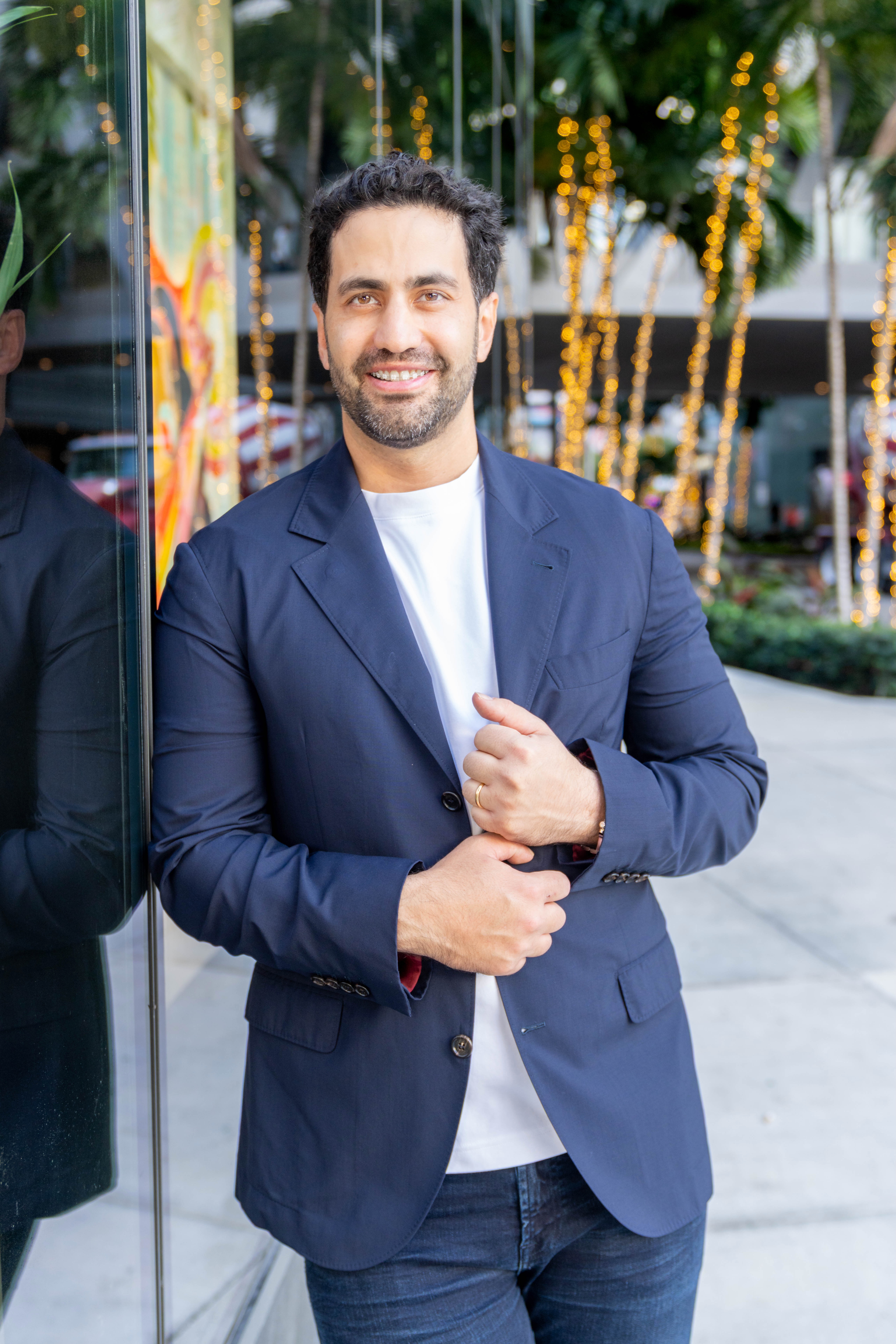
How this started
Before any of this I built and sold Inca's Treasure, a food company in Ecuador. That is where I learned what it costs to make something real, and it is also where I got the capital that started everything else.
I put that capital to work myself. I built the structures, took the risk, and lived with the outcomes long before I managed a dollar for anyone else, which means every question an investor asks me is one I have already had to answer at my own expense.
The first people who noticed were friends from EO, the Entrepreneurs' Organization. They had built real companies and were sitting on capital they did not know how to place, and I was not selling them anything. I told them what I had access to, what could go wrong, and what I was doing with my own money. Then the results came in, and results are the thing people repeat. One friend became a handful, a handful became families, and families became more than seventy-five of them across ten countries.
Infinity⁹ was never a business plan looking for clients. Nobody arrived because of a brochure.
How I think about decisions
I am obsessed with how decisions get made. Not with predictions, which are mostly entertainment, and not with conviction, which is usually a feeling wearing a suit, but with the machinery underneath: what you actually knew, what you refused to assume, and who was allowed to disagree with you.
The reason is simple. Nobody controls outcomes. Markets move, sponsors fail, currencies slide, and none of it asks permission. The only thing you ever control is the quality of the decision, and across enough repetitions a good process and a bad one produce results so far apart that people mistake the distance for luck.
It is why I draw a hard line between the investor who hunts for opportunities and the one who designs an architecture. Hunting works right up until the day it does not. Allocating is slower, considerably less exciting, and it is the only one of the two that survives a generation.
What fear actually is
When someone tells me they are afraid to invest, they are almost never talking about money. What they are telling me is that they are afraid of losing what cost them so much to build, afraid of not understanding, afraid that a system that was not designed for them might turn on them.
That fear is legitimate and it is usually not financial. It is inherited. Many of the families I work with come from places where prospering was dangerous and having was suspicious, where you learned early to be quiet about what you had, and that lesson does not disappear because the balance changed.
Fear does not resolve with more information, and it does not resolve with more control, because both are just the fear looking for somewhere to put itself. It resolves with structure. Knowing what you own, who pays you, where that money comes from, how you get out, and what protects you if everything goes wrong. A fear with no number attached will govern you. A fear with a number becomes a risk manager you did not have to hire.
It is why I would rather spend an hour on how someone decides than show them a deal.
The method
Everything above is why the Diamond exists. Four questions every opportunity has to answer, scored the same way every time, so that a decision made in a generous market and one made in a hostile one are actually comparable. The case against is written before the case for.
It is not a formula and it does not remove judgment. It removes the part of judgment that is really just mood.
The Diamond Method →Excellence in all things
I am Bahá'í. One of the ideas I grew up with is that work carried out in a spirit of service is itself a form of worship, which is a demanding thing to believe on a night when the work in front of you is a spreadsheet. Excellence in all things is not a principle I picked up in business. It is the part of my value system that everything else on this page rests on.
In practice it means the way you do anything is how you do everything. The care behind a wire instruction has to match the care behind a term sheet, and the way I answer a small question on a Sunday has to match the way I would answer a large one on a Monday. When the standard slips somewhere small, it has already slipped everywhere else.
It becomes visible to other people in three places: results, presence, and consistency.
Results
Results is the word I organize everything around, and I mean it narrowly. What counts is the outcome, not the effort behind it, not how busy the year was, and not how well the story reads when things went wrong. The market has never once cared how hard I worked, and any firm that starts rewarding intention over outcome has already begun to rot quietly from the inside.
I would rather tell you no and lose the fee than put you into something I would not fund myself. Fewer than one opportunity in a hundred survives our process, which means the ninety-nine we turn down are the actual work. Anyone can say yes, and saying yes is most of what this industry sells.
None of it photographs well. It is the accumulated weight of small refusals: the deal you walk away from in month eight, the sponsor you decline because something in the record does not reconcile, the number you refuse to use because you could not verify it yourself.
Presence
Presence is how I get there, and it is the part nobody sees. It means being real with people and being there when it counts.
Most of this business is built on managed distance: the relationship manager, the quarterly letter, the update written so carefully that it tells you nothing. If something goes sideways in a deal you will hear it from me early and plainly, not on page nine of a report three months later.
I came up through sport, tennis and polo and two Ironman 70.3s, and what it gave me is a working familiarity with the middle of things: the long stretch after the excitement has gone and before any result exists, which happens to be exactly where investing lives.
I learned what presence costs the expensive way. I came off a horse in the second chukker of a polo match and broke my arm in seven places. Dislocation, ligaments, tendons; the doctors discussed amputation. For weeks I could not write, eat, or dress myself, and I was still sending reports to my investors, typed with one finger, because capital does not wait for you to recover and the people who trusted me had not signed up for my bad luck.
I do not tell that for sympathy. I tell it because it is the clearest answer I have to the only question that really matters when you are deciding whether to trust someone with what you built: what does he do when it costs him something?
Anyone can be present when it is convenient. That is not presence, that is availability.
Consistency
Consistency is what makes either of the other two worth anything over time.
The same standard applies to a small commitment and a large one, partly because the family writing the smaller check is often taking the bigger risk relative to what they have, and partly because a standard you adjust for the size of the fee was never a standard.
One good year is a coincidence, and every market produces plenty of them. Ten decisions made the same way, in generous markets and hostile ones, is a method. A coincidence cannot be handed to your children. A method can. I would rather be trusted in a bad year than admired in a good one.
What we are building now
In 2025 the firm moved from investing alongside developers to co-developing. The first project under that model is WOMA in Wynwood, Miami, built with Uribe Schwarzkopf, with architecture by MVRDV and Kobi Karp. Our investors are not buying a finished story assembled by someone else. They enter the capital stack at the beginning, on terms we negotiated and documented ourselves.
Co-development is also the part of the business that tests everything written above. A building has a hundred places where the standard can quietly drop, and not one of them announces itself.
Why I teach
I publish because the real problem for most Latin American families is an information gap rather than a capital gap. They earned their money in businesses they understand completely, and then they are asked to decide in a market whose vocabulary alone is built to make them feel behind. That gap is where bad terms live, and where good families quietly lose money to people counting on the confusion.
So I explain what I know publicly, in Spanish, without asking for anything in return. If someone reads or watches enough to conclude they can do this without me, that is a good outcome. The people who do reach out arrive already knowing how I think, and the conversation starts several steps further along.
What you can expect from me
A direct answer to a direct question, including the two answers nobody wants to give, which are “I don't know” and “don't do this.” Bad news early rather than late. And nothing put in front of you that I would not take myself, on the same terms, with my own money.
That is the whole promise, and it is deliberately small, because a promise you can keep in a bad year is worth considerably more than one that only survives a good one.
Where I publish
I write and publish under ASAPinvests: a weekly letter, two podcasts, a YouTube channel, and my book Real Estate Funds Made Simple. It is all in one place, in English and in Spanish.
asapinvests.com →Family Office Wealth Management, Harvard Business School
Alternative Investments, Harvard Business School
Commercial Real Estate Analysis & Investment, MIT Sloan
Written and written about
Articles I have written, and the pieces others have written about the firm, in English and Spanish. The oldest one is from 2016, in Quito.
If you are deciding where to place capital, talk to me before you decide.
Request a Private Briefing
Infinity Capital Asset Management, LLC ("Infinity") is a real estate investment management firm operating as a platform for access to private commercial real estate, for accredited international investors and high-net-worth individuals. Registration does not imply a particular level of skill or training.
Past performance is not indicative of future results. Historical returns, expected returns and probability projections are speculative. All investment involves significant risk, including the possible total loss of capital. Infinity does not guarantee that investment objectives will be met.
Nothing here is an offer to sell or a solicitation of an offer to buy any security, nor investment, legal or tax advice. Any offering is made solely through definitive subscription documents under Regulation D of the Securities Act of 1933. Consult your own advisors.
Commercial brokerage operates through a licensed Florida agent with LRF Group at Berkshire Hathaway HomeServices, separately from investment management, under distinct regulatory oversight. Banking and custody are provided by partner institutions.